
Mark T.'s Brief ATM Cloning Scheme: A 72-Hour Capture Story
Mark T. spent 480 dollars on cloned debit cards in November 2024, withdrew 4900 dollars, and received five years in federal prison.
First published: | Revised: 2026-11-02 | Written by: Eliot Mercer
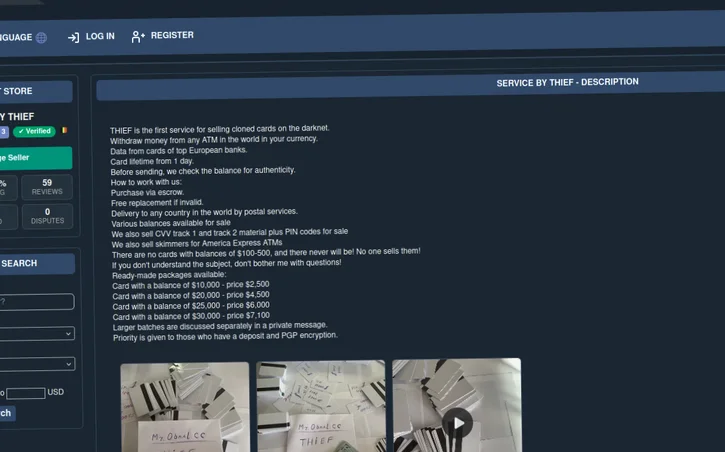
Welcome to Cryptic Nexus. You may be curious about how a minor offense on the dark web can lead to federal prison in such a short time. Many individuals believe that total digital anonymity shields them from law enforcement when exploring links related to 3.0 onion discussions. It's crucial to recognize that real-world crimes generate evidence, even with encryption in place. This article delves into the specific events that led to the arrest of a 34-year-old man residing in Tampa Bay, Florida, after he acquired sensitive financial information.
You should understand how modern security systems connect cryptocurrency transactions to physical ATMs and state databases. If you engage in digital currencies or analyze cyber threats, this comprehensive case study will offer you essential insights. We will review the complete timeline, the errors made in the process, and the investigative steps that unveiled this operation, ensuring that all pertinent details from official reports are presented.
The Mechanism of Carding
Carding remains a significant issue in the realm of cybercrime, as it involves the exploitation of stolen financial information. Understanding the typical process behind these fraudulent activities is essential for safeguarding your own information. The general flow of these transactions usually adheres to a specific order:
Criminals utilize devices, phishing tactics, or illegal data sourced from the dark web to collect magnetic tracks from cards. 2. They then transfer the stolen data onto blank plastic cards, producing counterfeit items that feature fake names and numbers. 3. The criminals obtain the necessary PIN codes through overlay keypads or by using surveillance cameras positioned near ATMs. 4. Before the legitimate cardholder becomes aware of any unusual activity, the suspect withdraws cash from an ATM. 5. The illicit funds are laundered using Bitcoin services or peer-to-peer platforms.
Mark bought six cloned debit cards for 480 dollars using Monero on a hidden platform. The delivery came in unmarked packaging. While this may look like a successful online deal, ATMs operate as systems for collecting evidence, not just simple cash dispensers. Although the site used cryptocurrency to mask transactions, the physical environment revealed the perpetrator. You should always ensure your safety measures are in place before assuming digital methods offer complete security. Assess every risk tied to forums discussing carding on dark web sites.
Look into discussions on cloned cards or techniques related to card cloning to grasp how law enforcement tracks these operations. It is crucial to protect yourself by learning about methods to prevent credit card skimming and using an effective skimmer protection device. Being aware of how to inspect for skimmers and knowing the signs of their presence can help you avoid severe financial losses. Additionally, understanding how to recognize a compromised card reader assists security teams in implementing effective skimming safeguards.
When examining images of ATM skimmers, stay attentive to odd features on the machine's surface. Always remain alert and engage with relevant discussions on credit card skimming in online communities to keep updated on new dangers.
Surveillance Systems and ATM Vulnerabilities
You rely on cash machines for convenience, but you must remember they function as advanced surveillance units. Modern hardware integrates multiple recording mechanisms to capture user activity. Internal sensors record high definition video at 1080p resolution. Many configurations include secondary hidden lenses positioned at alternative angles. Every transaction writes to a log with exact second-level precision, recording the exact amount, the card number, the terminal identifier, and the network status. Built-in geolocation tools transmit precise coordinates directly to financial institutions. Network logs capture connection metadata for every request sent to the processor.
When Mark approached the fourth cash machine in a Tampa Bay suburb, he wore no face covering, glasses, or hat. The internal camera captured his complete profile for twenty-three seconds while he extracted 700 dollars. Offenders frequently assume darknet anonymity shields them during physical world interactions. You must recognize that a cash machine serves as the exact boundary where digital activity translates into physical evidence. Anonymity ends the moment you interact with physical banking infrastructure.
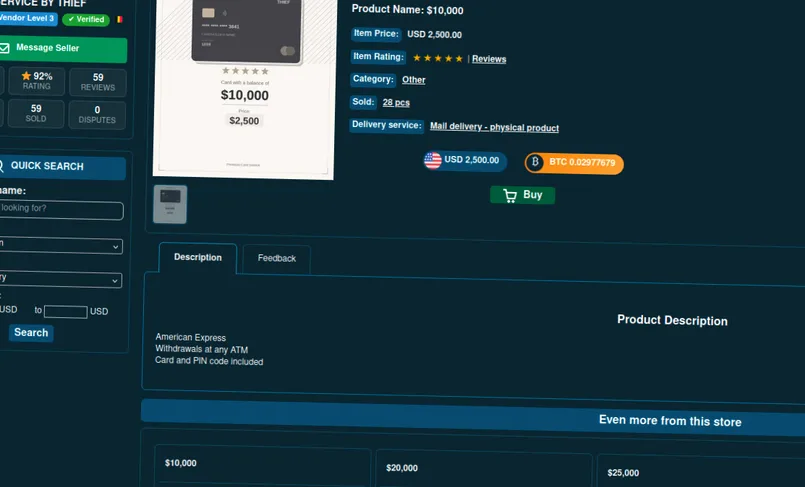
Investigative Timeline and Case Progression
You can trace the rapid escalation of the investigation through a strict fifteen-day chronological record. Federal and banking authorities coordinate quickly when financial anomalies emerge across multiple state lines:
On Day 1, unauthorized withdrawals prompted early fraud alerts from three victims who reported them to their banks in Florida, Georgia, and North Carolina.
On Day 3, suspicious withdrawal patterns were detected by automated anti-fraud algorithms, triggering an internal security review.
Day 5: The bank transfers the case to the United States Secret Service, granting federal jurisdiction over the financial crimes.
A clear facial image was isolated from the video footage of the fourth terminal on Day 8, resulting in the identification of Mark T. through a match with the driver license records from Florida's Department of Public Safety, even though he had no previous criminal record.
Day 12: Court orders provide access to electronic traces, browser histories, internet service provider records, and crypto wallet activity, successfully linking the Monero wallet to the darknet marketplace account.
Day 14: Authorities execute a search warrant at the suspect residence, recovering six blank cards, a magnetic stripe reader writer device, a laptop with Tor Browser traces, 3200 dollars in cash, and shipping packaging.
Day 15: Officers arrest Mark, who subsequently confesses during interrogation to purchasing the cards and executing four successful cash withdrawals while two additional cards remained blocked by the bank.
You must check the website where the purchase was made to understand how third-party vendors operate on hidden networks.
Financial Metrics and Material Evidence
Analyzing this federal prosecution requires examining the documented financial specifics, including transaction records, recovered funds, and judicial penalties. The following overview outlines the primary numerical findings from the official court records:
| Analytical Parameter | Evaluated Documentation |
|---|---|
| Cumulative Sum Liquidated via Terminals | $4,900 |
| Acquisition Expenditure for Replicated Cards | $480 |
| Elapsed Duration Until Apprehension | 15 days |
| Duration of Confinement in Federal Correctional Facility | 5 years (60 months) |
| Executed ATM Payout Transactions | 4 |
| Fines and restitution total $22,000. | |
| The duration of supervised release will be 3 years. |
You should consider how the physical evidence corroborates the digital information. The cash seized during the apartment raid corresponded precisely to the amounts withdrawn from the ATM. The confiscated magnetic stripe devices and unprogrammed blank cards provided substantial physical proof of illicit intentions. Keep in mind that physical items cannot be masked by using cryptographic privacy coins.
Cryptographic Limitations and Operational Mistakes
You might believe that privacy-focused coins offer absolute immunity from tracking. Mark utilized Monero specifically for its resistance to surveillance. However, investigators bypassed this barrier by examining the entry point of the transaction. To acquire Monero, Mark utilized a centralized cryptocurrency exchange that required mandatory know your customer verification. Uploading his passport and personal selfie linked his real-world identity to the digital purchase. Under a court order, the exchange surrendered his complete identity and transaction history.
Several tactical mistakes accelerated his identification and subsequent arrest:
Operating within a restricted geographic radius by visiting four machines located within forty miles of his residential address.
Failing to wear any physical disguise, leaving his uncovered face exposed to high-resolution surveillance optics.
Purchasing privacy coins through a centralized exchange tied to his legal identification documents.
Storing physical tools, blank cards, and encoding hardware inside his private residence.
Retaining cash in denominations that directly matched the automated dispensing records of the terminal.
Executing all withdrawals within a compressed two-week timeframe rather than spreading operations over an extended duration.
You need to recognize that physical security systems and digital forensics function as a unified investigative framework. Security professionals emphasize that automated banking pattern analysis flags anomalies instantly before human analysts review the logs. You must remember that customer education remains vital because rapid reporting allows institutions to block compromised accounts and minimize financial losses.
Final Verdict and Sentencing
In March 2025, Mark T. confessed to committing fraud under 18 U.S.C. § 1029 and money laundering under 18 U.S.C. § 1957, resulting in a 60-month prison sentence from the U.S. District Court for Florida's Middle District. Following his release, he will undergo supervised release for three years. The victims affected by his actions were to receive $22,000 in fine and restitution, as ordered by the court.
It is vital to comprehend the implications of this legal outcome. High-profile criminals may seem to operate in the shadows, but those at the end of these schemes face serious risks and severe penalties. Regularly assessing your online safety and staying vigilant against security threats in your daily life is crucial.